We had gone for pheasants.
In the second week of November 2019 — the 10th to the 15th — Mohebullah Naveed and I drove up to Machiara National Park in Azad Jammu and Kashmir, a couple of hours out of Muzaffarabad. Moheb and I were there for the birds we had been thinking about for months: the monal, that impossible metallic bird, and the cheer pheasant, which is harder to find and harder still to photograph.
Pheasant work is walking. There is no shortcut and no hide that will do it for you. Each day we tracked eleven to fifteen kilometres, up and down, watching the slopes for movement, listening. There was snow on the ground. There was nobody around for miles and miles — no road noise, no voices, nothing but our own boots and whatever the valley chose to show us.
And what it showed us, on one of those mornings, was not a pheasant.
We were working our way up a very narrow valley when we saw them: two birds, a good size, perhaps a hundred feet ahead and above us, going at each other in the air. Not display, not territory. They were fighting over a catch — one bird had food, the other wanted it.
Then it resolved. One of them took possession, broke off, and came down the valley.
Straight at us.
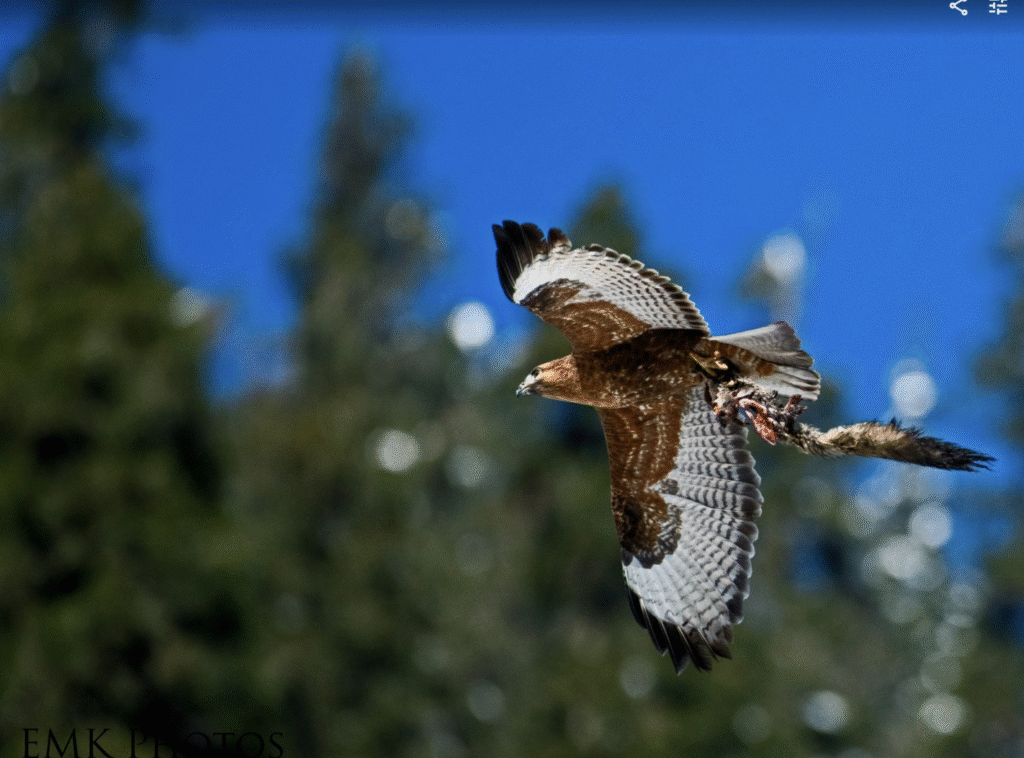
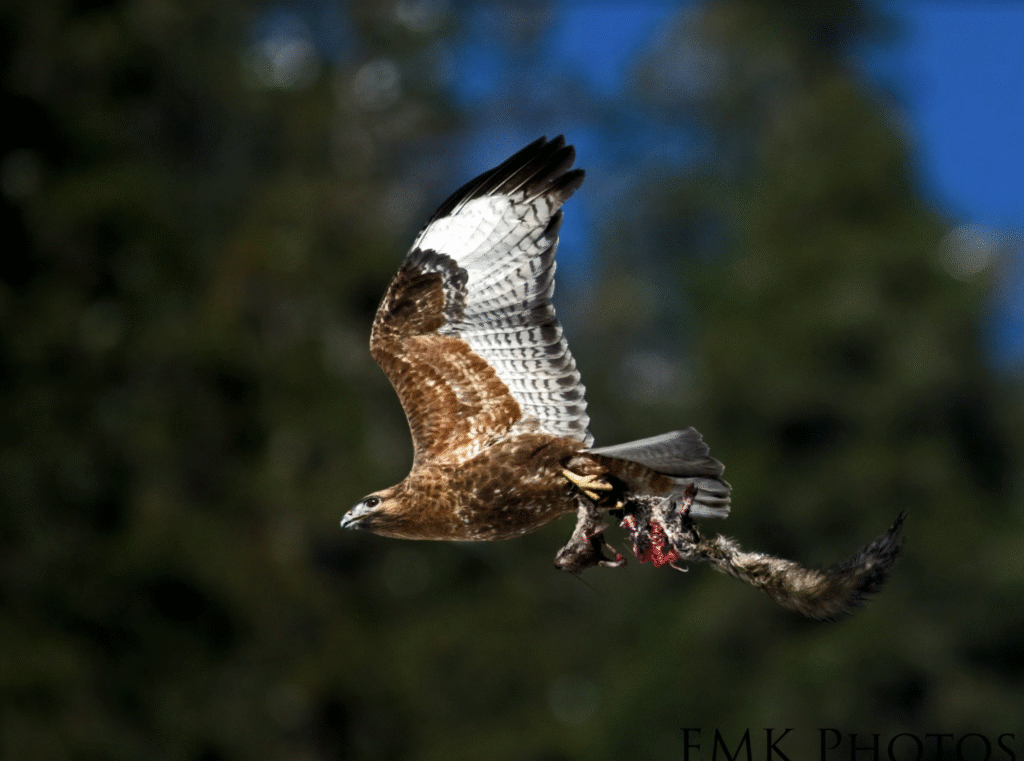
It flew directly over our heads, close, and for a few seconds we had a view of a wild raptor in flight that most photographers wait a lifetime for and never receive. A Himalayan buzzard, wings spread wide open, and hanging from its talons a flying squirrel — the long, soft, ridiculous tail streaming out behind it in the air.
I made a few frames.
They came out sharp, and there is a reason for that beyond luck. The snow on the ground was throwing light back upward. So the bird had sun on its back and reflected light coming up from below, filling the underside of the wings and the body — the fill light every studio photographer builds with a reflector, laid out across an entire mountainside for free. The barring on the underwing, the yellow of the feet, the tail of the squirrel: all of it lit from underneath.
Then it was gone up the valley, and the two of us stood there in the snow making the noises people make when something like that happens.
We still talk about it. Not occasionally — routinely. Years later it comes up between us as though it were last week, and both of us know we are unlikely to ever see it again. That combination — the fight, the winner, the line of flight bringing it right over us, the prey still in its feet, the snow-light underneath — cannot be arranged, requested, or planned for. You can only be standing in the right valley, on the right morning, with the camera awake in your hands.
Which is, in the end, what all those kilometres are for.