
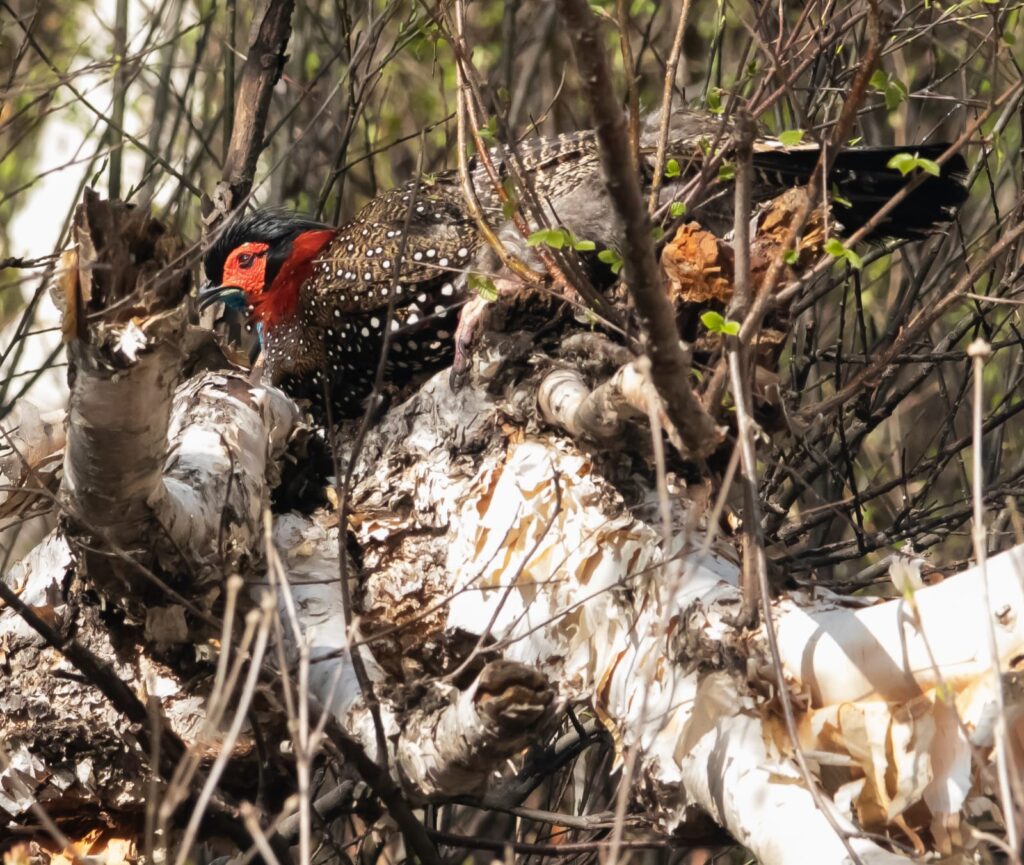
It was just before dawn in May 2025 when our small team stood in the chill of Allai Valley’s high forests, ears tuned to the stillness. The first light hadn’t yet touched the ridges of Allai Valley, but the forest was already whispering. Then, breaking through the mist, came a soft, fluting call — the unmistakable voice of the Male Western Horned Tragopan.
That moment marked more than just another field note in a wildlife survey. It was history in the making — the first confirmed evidence of this rare and vulnerable bird in Allai Valley.
—
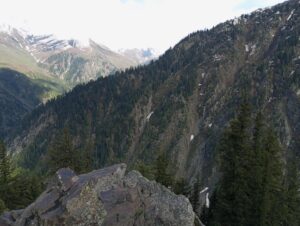
Into the Heart of the Western Himalayas
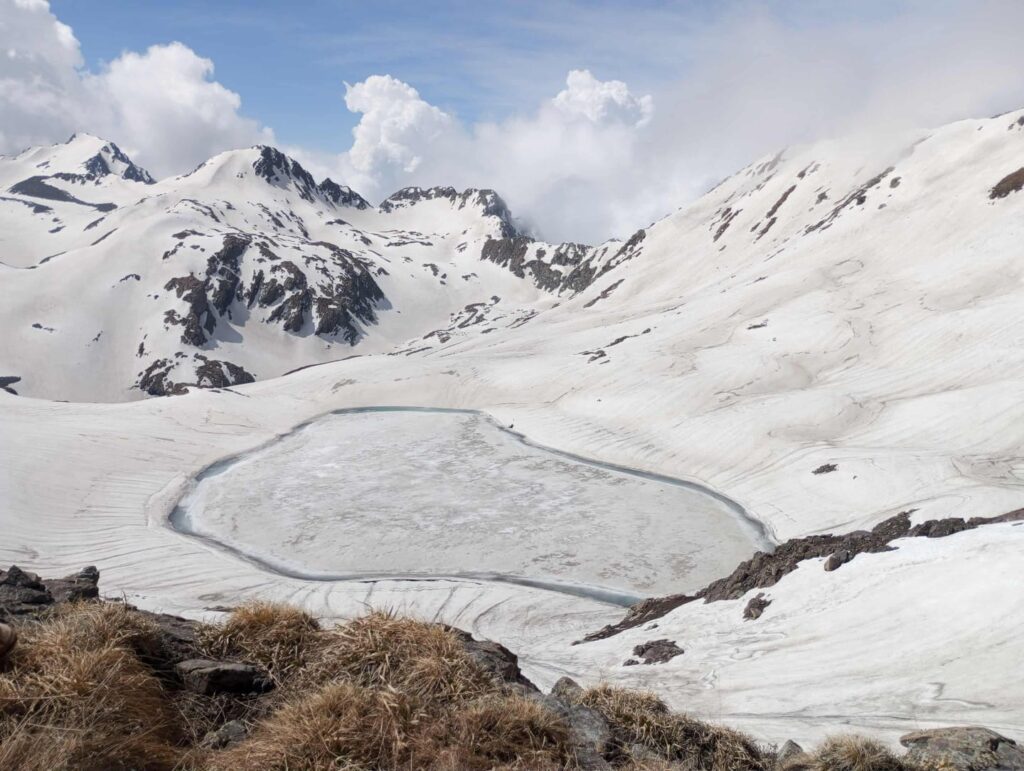
Allai Valley, located between the mighty Indus River and the snowy spurs of Kohistan, remains one of Khyber Pakhtunkhwa’s least-explored wild landscapes. With slopes rising from 500 to over 4,600 meters, the valley shelters a living mosaic of blue pines, firs, and birches — home to black bears, musk deer, leopards, and, as we discovered, some of the Himalaya’s most charismatic pheasants.
Our mission was simple yet ambitious: to find out whether the Western Horned Tragopan — Pakistan’s most spectacular and secretive pheasant — still roamed these forests. Alongside it, we hoped to understand the status of its colorful cousins, the Koklass and Himalayan Monal.
—
Listening to the Mountains
Armed with binoculars, notebooks, and nine motion-triggered cameras, we set up five call count stations across the upper valley. Each morning, before sunrise, we took our positions — 15 minutes before first light — and waited. The forest slowly came alive with bird calls: The Koklass’s sharp notes, the beautiful whistles of Monals, and, at times, the deep, rhythmic calls of a Tragopan male calling from dense undergrowth above 3,000 meters.
Over two weeks, we recorded 70 calls — 42 from Koklass, 16 from Monals, and 11 from Tragopans. The data told a fascinating story: Koklass pheasants were thriving across a wide range of altitudes, but Tragopans remained confined to small patches of high-altitude conifer forest — fragile refuges under growing human pressure.
Two of our camera traps even captured the elusive Tragopan on film — one proud male with his bright crimson breast feathers, another a shy female blending perfectly with the forest floor. For our team, these were more than just photos — they were first ever proof that Allai Valley still holds one of the Himalaya’s most vulnerable treasures.
—
Trouble Beneath the Trees
Beauty here, however, hides a struggle. During our trek, we witnessed signs of illegal timber cutting and found clearings where livestock had stripped away undergrowth crucial for nesting birds. Local hunters admitted that pheasants were still hunted for meat as luxurious delicacy in winters. For a species already clinging to survival, these pressures could be devastating.
—
Hope in the Hills
But there is hope. Our findings have already laid the groundwork for new Safe Breeding Zones — community-backed areas where hunting, grazing, and logging can be restricted during the breeding season. Engaging local residents as eco-guides and birdwatchers could not only protect the species but also bring sustainable livelihoods to these remote villages.
The Western Horned Tragopan may be shy and secretive, but it is also resilient. Each dawn call from Allai’s misty slopes is a small victory — a reminder that even in remote corners of Pakistan, conservation still sings.
—
Written by: **Mohebullah Naveed**,
(Based on the 2025 survey “Occurrence and Population Status of Western Horned Tragopans and Other Himalayan Pheasants in Allai Valley, Khyber Pakhtunkhwa”)